The best workout routine for beginners is simple, repeatable, and focused on building strength, stamina, and confidence without overloading your body. A strong beginner workout plan usually includes full-body strength training, light cardio, mobility work, and enough rest to recover. You do not need complicated exercises or daily intense sessions; you need a routine you can follow consistently and progress gradually.
What is the best workout routine for beginners?
The best workout routine for beginners is a balanced weekly plan that trains the whole body two to three times per week, adds easy cardio on separate days, and includes rest days. This approach helps you learn proper movement patterns, build a foundation, and avoid doing too much too soon. If you are new to exercise, returning after a long break, or unsure where to start, this beginner exercise program gives you a practical structure you can adjust to your fitness level.
A good starting week might look like this:
Day 1: Full-body strength workout
Day 2: Easy cardio and stretching
Day 3: Rest or gentle walking
Day 4: Full-body strength workout
Day 5: Easy cardio or mobility
Day 6: Optional light full-body workout or active recovery
Day 7: Rest
This schedule works because it gives your muscles time to recover while keeping you active often enough to build momentum. If three strength days feel like too much at first, start with two. The best workout routine for beginners is the one you can complete with good form and repeat next week.
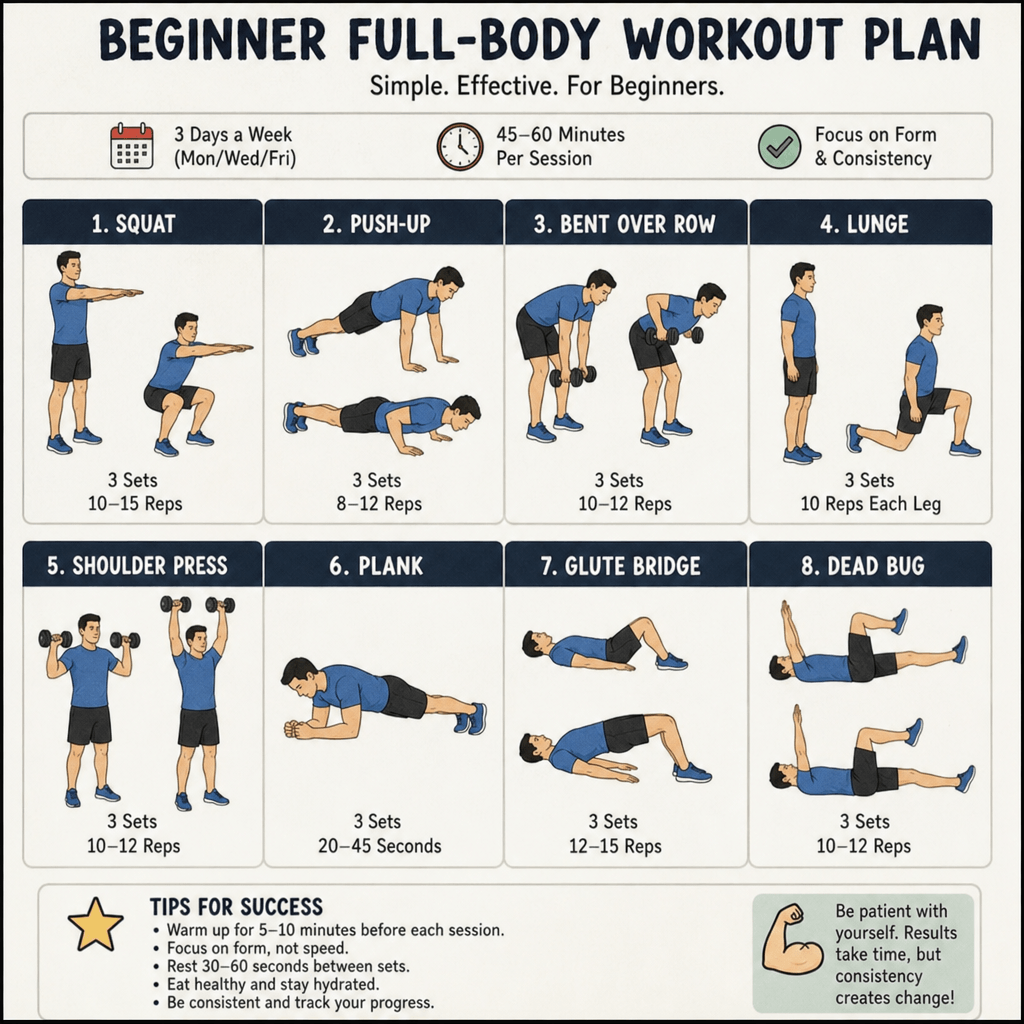
Step-by-step beginner workout plan
Use this easy workout routine for four to six weeks before making major changes. Keep each session controlled, focus on form, and stop before your technique breaks down.
Warm up for five to ten minutes
Begin with light movement that raises your body temperature and prepares your joints. Walk on a treadmill, cycle slowly, march in place, or do gentle dynamic movements such as arm circles, hip circles, and bodyweight squats. A warm-up should feel easy, not exhausting. The goal is to make your workout safer and more comfortable, not to tire yourself out before the main exercises.
Train your lower body with basic movement patterns
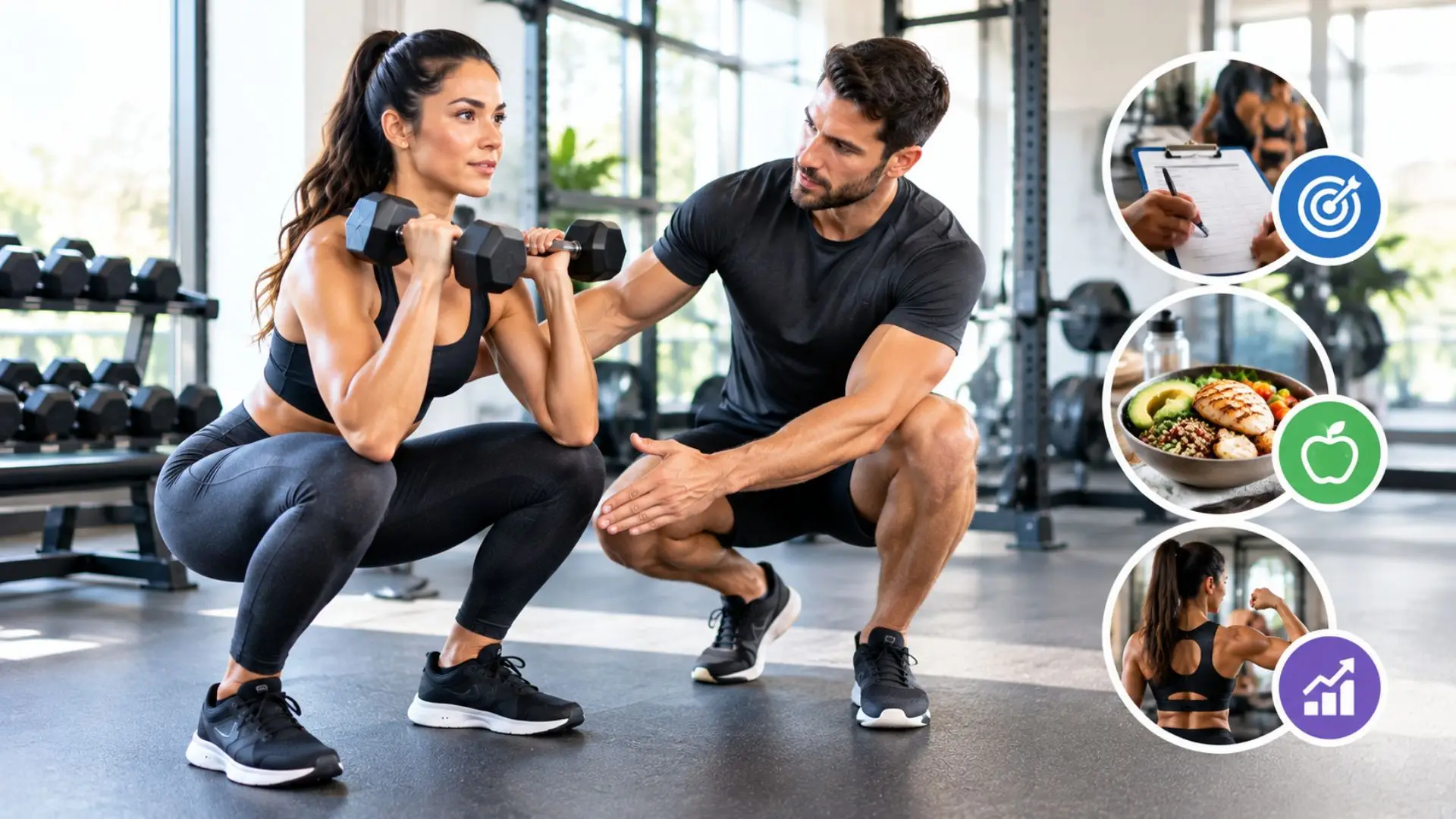
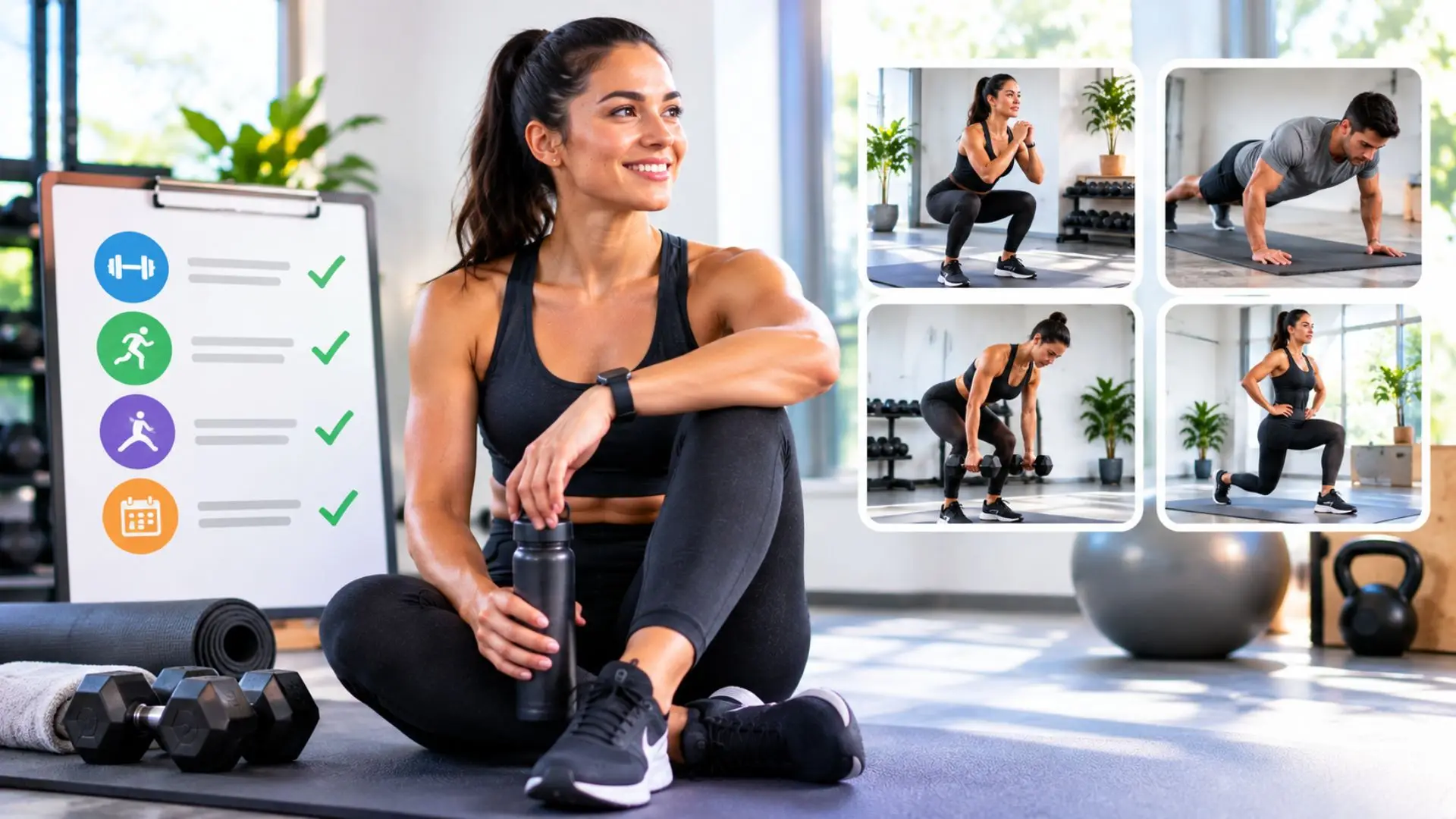
Start with exercises that teach you how to squat, hinge, and step. Good beginner choices include bodyweight squats, glute bridges, step-ups, and supported lunges. These moves strengthen your legs and hips, which support everyday activities like climbing stairs, lifting objects, and walking longer distances.
Try two sets of 8 to 12 repetitions for each movement. If that feels too hard, reduce the range of motion or hold onto a stable surface. If it feels too easy, slow down the movement before adding weight.
Build upper-body strength with push and pull exercises
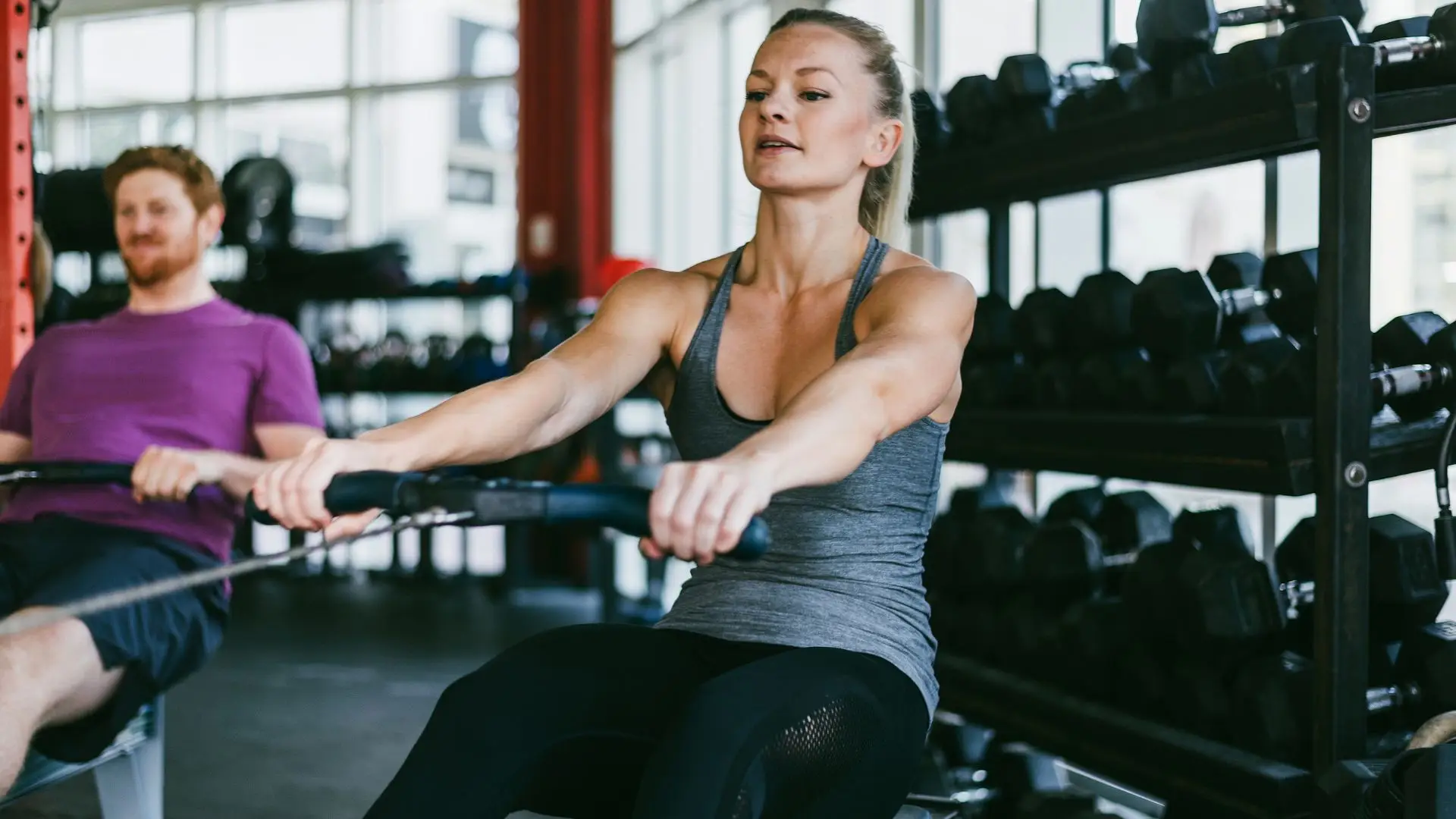
A complete beginner workout plan should include both pushing and pulling. For pushing, try incline push-ups, wall push-ups, or a light dumbbell chest press. For pulling, use seated rows, resistance band rows, or a machine row if you are at the gym.
Balance matters here. Many beginners do more pushing than pulling, which can lead to tightness and poor posture over time. Aim for one push exercise and one pull exercise in each full-body session.
Add simple core training
Core training is not just about abdominal exercises. Your core helps stabilize your spine and control movement. Start with beginner-friendly moves such as dead bugs, bird dogs, planks from the knees, or standing marches.
Keep core exercises slow and controlled. If your lower back arches or your shoulders tense up, make the exercise easier. One or two core movements at the end of each strength session is enough for most beginners.
Finish with light cardio or stretching
After strength training, spend five to ten minutes cooling down. Walk slowly, breathe deeply, and stretch the muscles that feel tight. This helps you transition out of workout mode and notice how your body feels.
If your main goal is general fitness, you can also add 10 to 20 minutes of easy cardio after strength training. Keep the intensity comfortable enough that you can speak in short sentences.
The best full body workout routine for beginners
A full-body routine is ideal for beginners because it trains major muscle groups in one session and does not require a complicated split. Do this workout two or three times per week on nonconsecutive days.
Beginner full-body workout:
Bodyweight squat or leg press — 2 sets of 8 to 12 reps
Glute bridge or hip hinge drill — 2 sets of 10 to 12 reps
Incline push-up or chest press — 2 sets of 8 to 12 reps
Resistance band row or seated row — 2 sets of 8 to 12 reps
Step-up or supported lunge — 2 sets of 8 reps per side
Dead bug or bird dog — 2 sets of 6 to 10 reps per side
Easy walking, cycling, or stretching — 5 to 10 minutes
Rest for 60 to 90 seconds between sets. Use a pace that lets you control the movement from start to finish. You should finish feeling challenged but not crushed.
This can also become the best gym workout routine for beginners by using machines for support. Machines such as the leg press, chest press, lat pulldown, and seated row can help you learn movement patterns with more stability. If you prefer home workouts, use bodyweight exercises, resistance bands, or light dumbbells instead.
How hard should a beginner workout feel?
A beginner workout should feel moderately challenging, not punishing. You should feel like you are working, but you should still be able to maintain good form and recover within a day or two. If you are extremely sore, exhausted, or dreading every session, the routine is probably too intense.
Use this simple effort guide:
Too easy: You could do many more reps with no fatigue.
Just right: The last few reps feel challenging, but your form stays solid.
Too hard: You rush, hold your breath, lose control, or feel pain.
Muscle fatigue is normal. Sharp pain, dizziness, chest pain, or joint pain is not something to push through. If you have a medical condition, injury, or major concern, get guidance from a qualified health professional before starting or changing an exercise program.
Progress your routine gradually
Progress is what turns a starter routine into lasting fitness. The key is to change one thing at a time. Beginners often make the mistake of adding more days, heavier weights, and harder exercises all at once, which can make recovery difficult.
Use one of these progress methods each week:
Add 1 to 2 repetitions to an exercise.
Add one extra set to one or two movements.
Increase weight slightly when all reps feel controlled.
Add five minutes to an easy cardio session.
Improve form, range of motion, or tempo before increasing intensity.
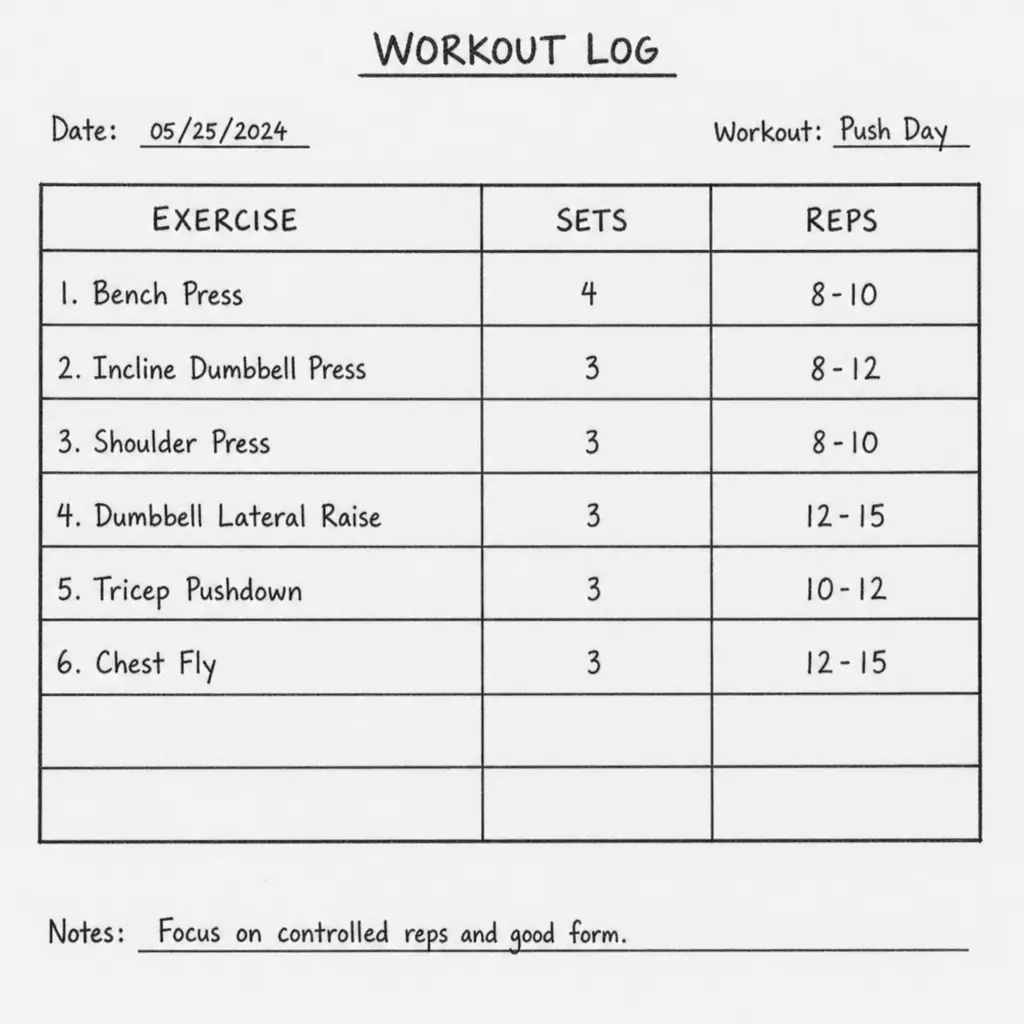
Track your workouts in a notebook or app. Write down the exercise, sets, reps, weight if used, and how the session felt. This helps you see improvement even when progress feels slow.
Common beginner mistakes to avoid
Small adjustments can make your beginner exercise program more effective and easier to maintain. Focus on consistency first, then intensity.
Avoid these common mistakes:
Skipping warm-ups: Cold muscles and stiff joints make workouts feel harder.
Doing too much too soon: More is not always better, especially at the start.
Ignoring form: Good technique matters more than heavier weight.
Training through pain: Discomfort and effort are different from pain.
Changing routines constantly: Stick with a plan long enough to improve.
Neglecting rest: Recovery is when your body adapts and gets stronger.
You do not need a perfect routine to begin. You need a safe, realistic plan that teaches the basics and builds confidence.
FAQ: beginner workout routines
How many days a week should beginners work out?
Most beginners do well with two to three strength workouts per week plus one or two easy cardio days. Rest days are part of the plan, especially while your body adapts.
Is it better to work out at home or at the gym?
Both can work. Home workouts are convenient and low-pressure, while gym workouts offer more equipment and easier ways to adjust resistance. Choose the setting you are most likely to use consistently.
How long should a beginner workout last?
A useful beginner workout can take 30 to 45 minutes, including warm-up and cooldown. Shorter sessions can still help if they are focused and repeated regularly.
Should beginners lift weights?
Yes, beginners can lift weights if they start light and use proper form. Bodyweight exercises, resistance bands, dumbbells, and machines are all valid options.
When will I see results?
Many beginners notice better energy, coordination, or confidence before visible changes. Physical results depend on consistency, nutrition, sleep, recovery, and your starting point.
Stop Guessing in the Gym: Start Your Fitness Journey with Confidence
Starting a workout routine can feel overwhelming with so much conflicting advice, but the best beginner plan isn’t complex—it’s consistent, balanced, and tailored to where you are right now. Focusing on foundational movements, proper technique, and gradual progression allows you to build real strength and habit without risk of burnout or injury. You don’t have to figure it out alone or guess what works. Contact us today to connect with our expert fitness coaches, and let’s build a step-by-step, beginner-friendly workout program designed specifically for your schedule and goals.