If you’ve ever hit the gym feeling sluggish or run out of steam halfway through your session, you’ve probably asked, “what should I eat before a workout?” The right pre-workout nutrition can be the difference between a mediocre session and one where you hit new personal bests.
What you eat before training affects your energy levels, strength output, endurance, and even how well you recover afterward. This guide breaks down exactly what to eat before a workout, when to eat it, and how to tailor your pre-workout nutrition to your specific training goals.
What Should I Eat Before a Workout? The Short Answer
The best pre-workout meal includes a combination of carbohydrates for quick energy and a moderate amount of protein to support muscle function, eaten roughly 1 to 3 hours before training. If you’re short on time, a smaller, easily digestible snack 30 to 60 minutes beforehand can still provide a helpful energy boost.
The right combination depends on the timing of your meal, the type of workout you’re doing, and your individual digestion, but the core principle remains the same: prioritize easily digestible carbs and moderate protein while limiting fat and fiber close to training time.
Why Pre-Workout Nutrition Matters
- Carbohydrates fuel performance. Carbs are your body’s preferred energy source during moderate-to-high intensity exercise, replenishing glycogen stores your muscles rely on.
- Protein supports muscle function. A small amount of protein before training can help reduce muscle breakdown and support performance.
- Proper fueling improves output. Training on empty or with the wrong foods can lead to fatigue, dizziness, or reduced strength and endurance.
- Digestion timing prevents discomfort. Eating the right foods at the right time helps avoid cramping, bloating, or an upset stomach mid-workout.
What to Eat Before a Workout, by Timing
Not all pre-workout meals are created equal — the right choice depends largely on how much time you have before you train.
1. Eating 2–3 Hours Before a Workout
This window allows for a full meal that includes carbohydrates, protein, and a small amount of healthy fat.
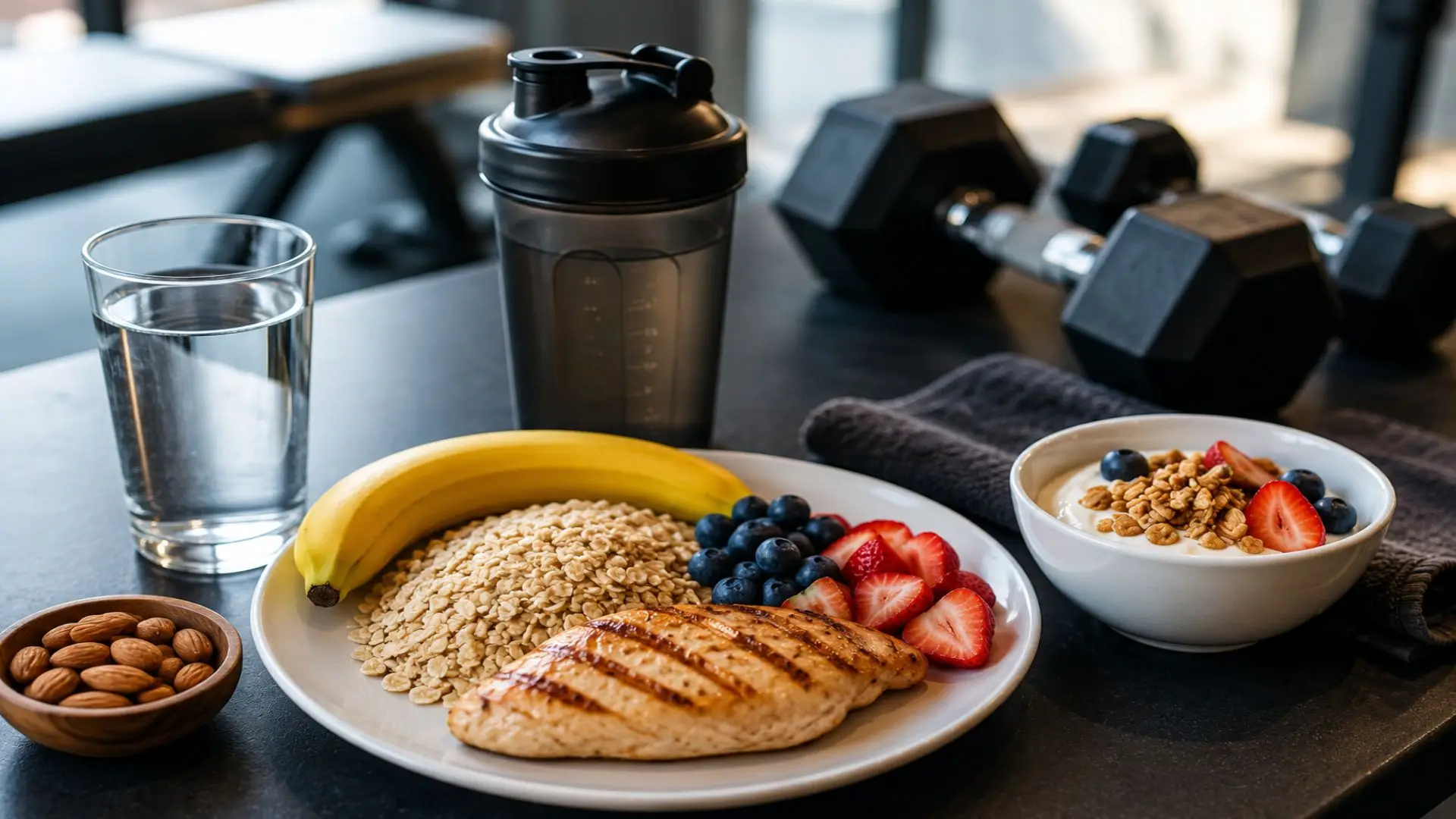
- Grilled chicken with rice and vegetables
- Oatmeal with fruit and a scoop of protein powder
- Whole grain toast with eggs and avocado
2. Eating 30–60 Minutes Before a Workout
Closer to training time, lighter, faster-digesting options work best to avoid gastrointestinal discomfort.
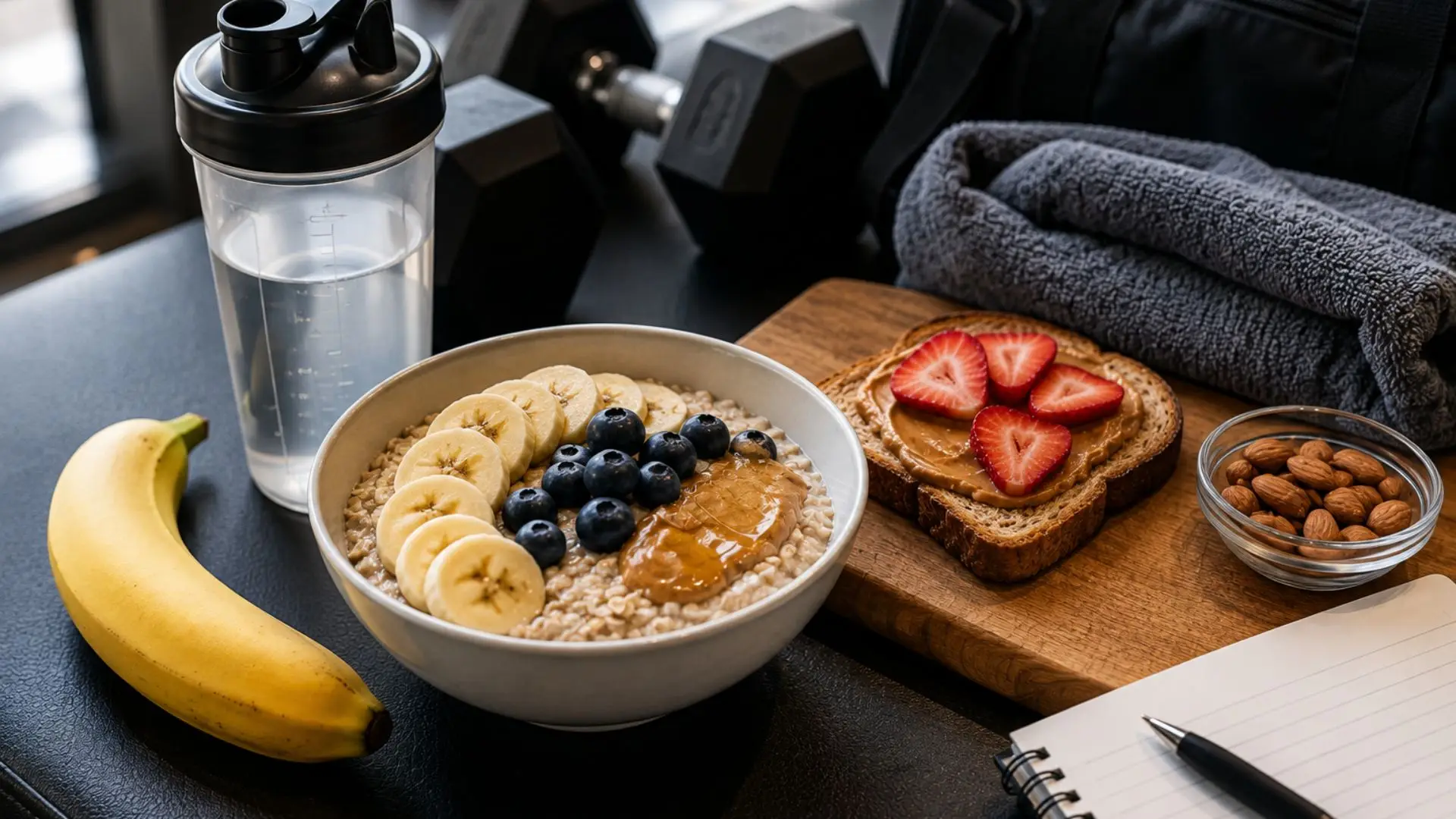
- A banana with a small amount of nut butter
- Greek yogurt with honey
- A rice cake with a slice of turkey
- A small protein shake
3. Training First Thing in the Morning
If you train early and can’t fit in a full meal, a small carbohydrate source, like a piece of fruit or a few dates, can help top off energy stores without weighing you down.
What to Avoid Eating Before a Workout
- High-fat meals. Fat slows digestion, which can leave you feeling sluggish or cause discomfort during exercise.
- High-fiber foods right before training. While healthy in general, fiber-rich foods can cause bloating or cramping close to workout time.
- Large, heavy meals close to training. Eating too much too close to your workout can divert blood flow to digestion instead of your muscles.
- Unfamiliar foods on training day. Save new foods for rest days to avoid unexpected digestive issues during a workout.
Hydration: The Often-Overlooked Piece
Proper hydration is just as important as food when it comes to workout performance. Dehydration, even mild, can reduce strength, endurance, and focus during training.
Actionable hydration tips:
- Drink 16–20 ounces of water 2–3 hours before training.
- Sip another 8–10 ounces about 20–30 minutes beforehand.
- Continue hydrating throughout your workout, especially during longer or more intense sessions.
Tailoring Pre-Workout Nutrition to Your Goals
For Strength Training
Focus on a balanced mix of carbohydrates and protein to fuel lifting sessions and support muscle performance throughout your workout.
For Endurance or Cardio Training
Prioritize easily digestible carbohydrates to maintain energy over longer training sessions, with a smaller emphasis on protein and fat.
For Early Morning Workouts
Opt for a small, quick-digesting snack if a full meal isn’t practical, and focus on a more substantial meal after training to support recovery.
Frequently Asked Questions
What should I eat before a workout if I only have 30 minutes?
A light, fast-digesting snack like a banana, a small handful of dried fruit, or a small protein shake works well when time is limited.
Is it bad to work out on an empty stomach?
It depends on the individual and workout intensity. Some people perform fine training fasted, especially for lower-intensity sessions, while others feel fatigued or lightheaded without eating beforehand.
Should I eat protein or carbs before a workout?
Both matter, but carbohydrates are typically the priority for immediate energy, while a moderate amount of protein supports muscle function during training.
How long before a workout should I eat?
Ideally, eat a full meal 1 to 3 hours before training, or a smaller snack 30 to 60 minutes beforehand if time is limited.
Can I drink coffee before a workout instead of eating?
Coffee can provide a helpful energy and focus boost, but it isn't a substitute for proper fuel, especially before longer or more intense training sessions.
Final Thoughts on Pre-Workout Nutrition
So, what should I eat before a workout? The best approach combines easily digestible carbohydrates with a moderate amount of protein, timed appropriately based on how soon you’re training. Getting your pre-workout nutrition right can noticeably improve your energy, strength, and overall performance in the gym.
Small adjustments to what and when you eat before training can make a meaningful difference in how you feel and perform, session after session.
Ready to Take Your Training to the Next Level?
Nutrition is just one piece of the puzzle — pairing it with a structured, personalized training plan is where real results happen. At Personal Training STG, our certified trainers help you build a complete approach to fitness, from what you eat to how you train.
Contact us today to schedule your consultation and start fueling your workouts the right way.