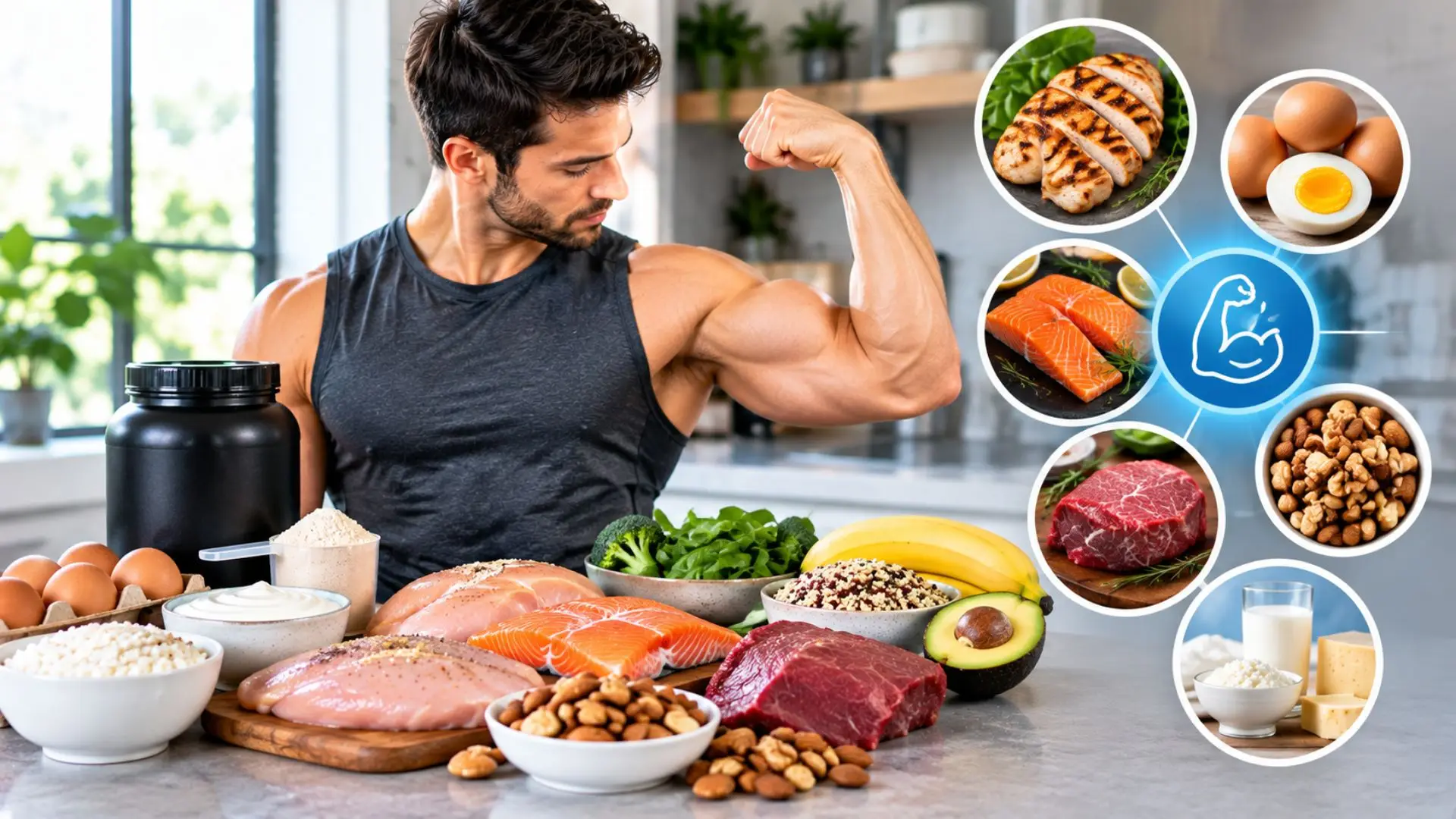
If you’re new to fitness, one of the first questions you’ve probably asked is: “How much protein do I need to build muscle?” It’s a smart question because protein plays a major role in muscle growth, recovery, and overall fitness progress.
The challenge is that there’s a lot of confusing advice online. Some people say you need massive amounts of protein, while others claim supplements are necessary. The truth is much simpler. Most beginners can build muscle successfully with a balanced approach and a clear understanding of how protein works.
In this guide, you’ll learn exactly how much protein you need to build muscle, the best protein sources, common mistakes to avoid, and practical tips to help you see better results from your workouts.
Why Protein Matters for Muscle Growth
Protein is one of the essential nutrients your body needs to repair and build muscle tissue. When you strength train, your muscles experience small amounts of stress and breakdown. Protein helps your body repair those muscle fibers so they grow back stronger.
Without enough protein, it becomes harder for your body to:
- Recover after workouts
- Build lean muscle
- Maintain strength
- Improve performance
For adults new to fitness, getting enough protein can make a noticeable difference in how quickly you recover and progress.
How Much Protein Do I Need to Build Muscle?
For most adults trying to build muscle, a good general recommendation is:
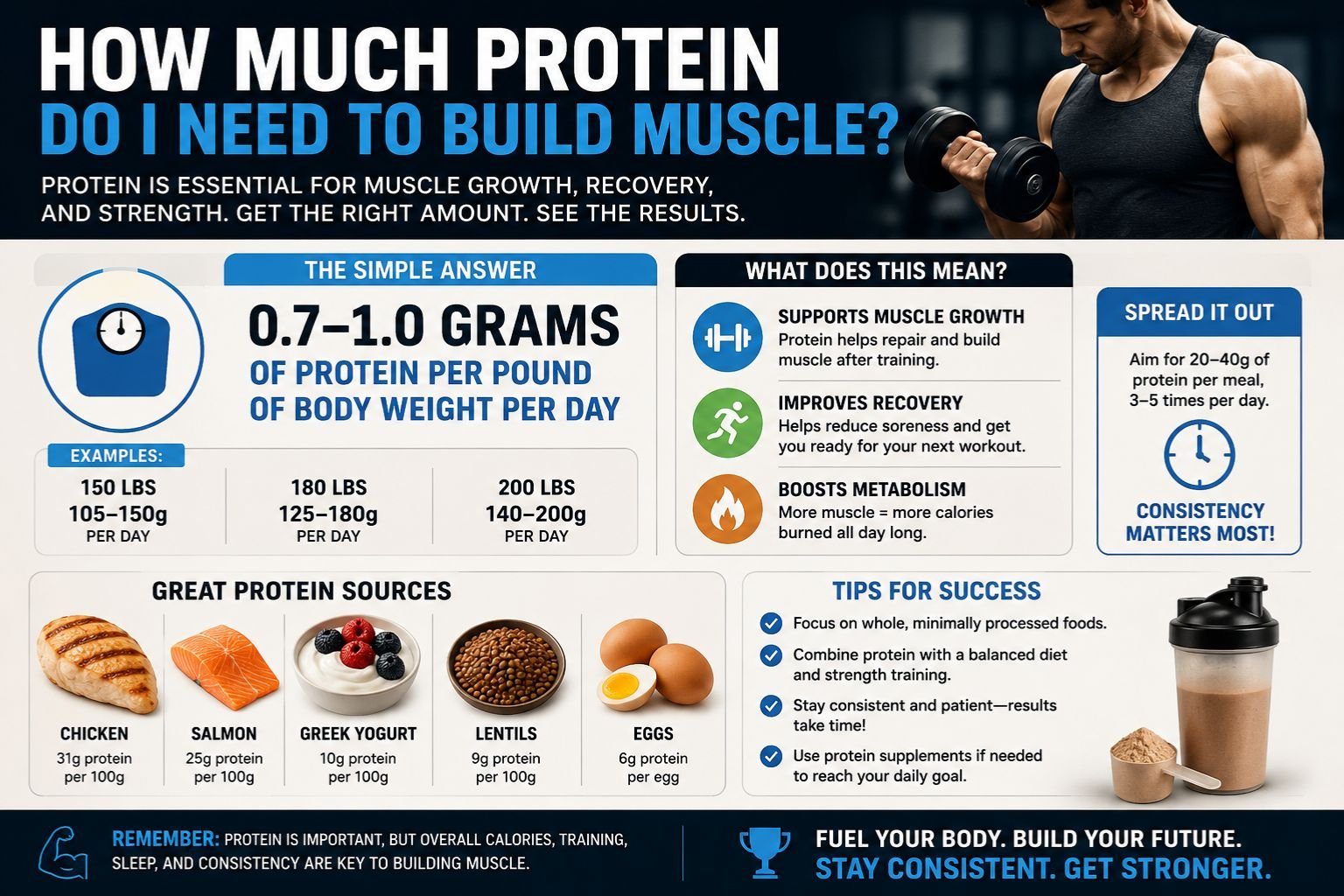
0.7 to 1 gram of protein per pound of body weight per day
That means:
- A 150-pound person may need around 105–150 grams of protein daily
- A 180-pound person may need around 125–180 grams daily
If that sounds like a lot, don’t worry. You don’t need to hit the perfect number every day to see progress. Consistency matters more than perfection.
For beginners, aiming toward the middle of that range is often enough to support muscle growth effectively.
Do You Need Protein Immediately After a Workout?
Many people believe you must drink a protein shake within minutes of finishing your workout. While post-workout protein can help recovery, the timing is not as strict as many people think.
What matters most is your total daily protein intake.
That said, eating protein within a couple of hours after training can support:
- Muscle recovery
- Reduced soreness
- Muscle protein synthesis
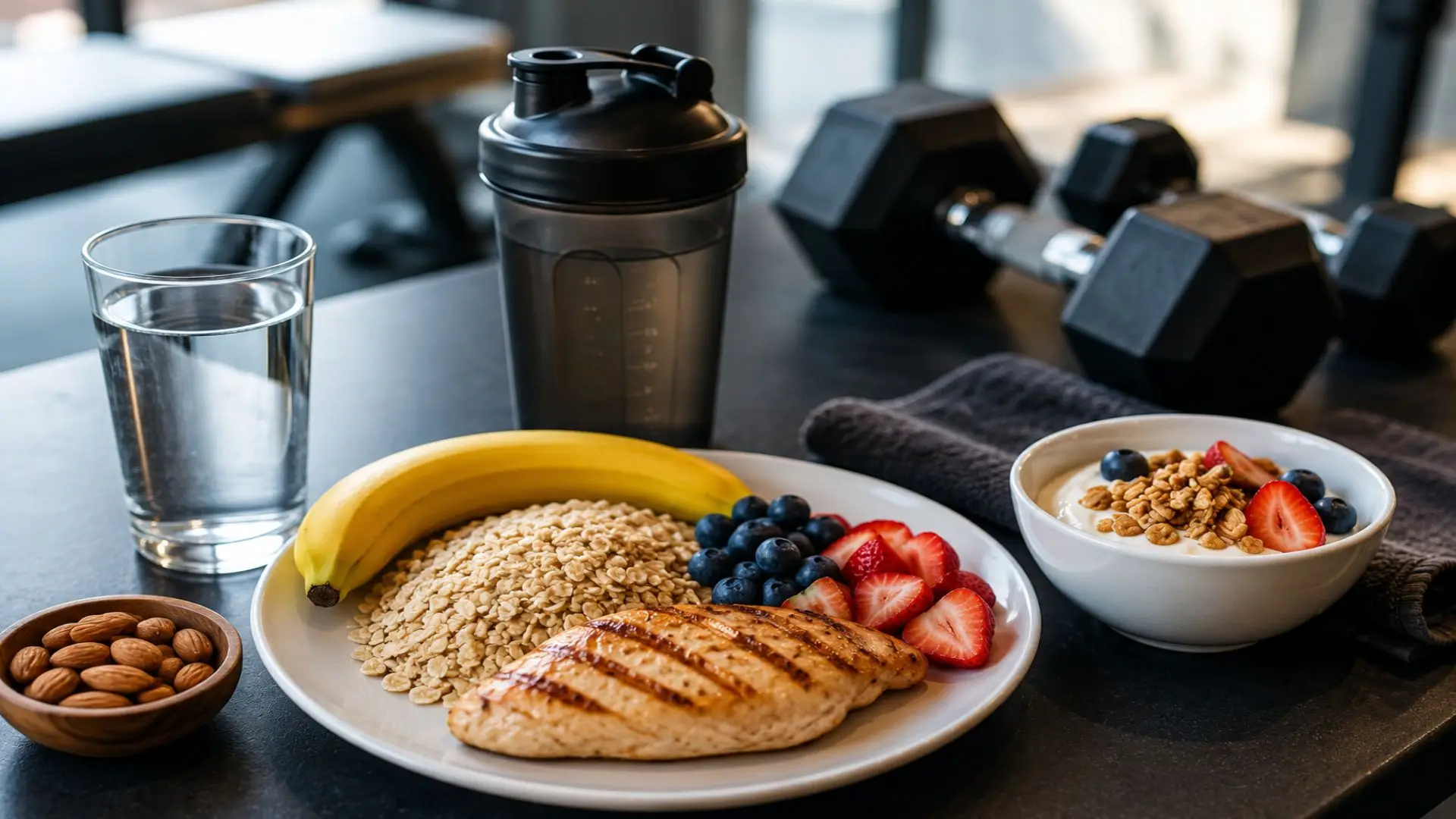
A simple post-workout meal could include:
- Chicken and rice
- Greek yogurt with fruit
- Eggs and toast
- A protein smoothie
Best Protein Sources for Building Muscle
You do not need expensive supplements to build muscle. Whole foods can provide plenty of high-quality protein.
Animal-Based Protein Sources
These are complete proteins, meaning they contain all essential amino acids.
Good options include:
- Chicken breast
- Turkey
- Lean beef
- Fish
- Eggs
- Greek yogurt
- Cottage cheese
Plant-Based Protein Sources
Plant-based eaters can still build muscle effectively with proper planning.
Good options include:
- Lentils
- Tofu
- Tempeh
- Beans
- Quinoa
- Edamame
Many people combine different plant proteins throughout the day to support muscle growth.
Are Protein Supplements Necessary?
Protein powders can be convenient, but they are not required.
Supplements are most helpful when:
- You struggle to eat enough protein
- You have a busy schedule
- You need a quick post-workout option
A protein shake should supplement your diet—not replace balanced meals.
For beginners, focusing on whole foods first is usually the best approach.
How to Spread Protein Throughout the Day
Your body uses protein more efficiently when it’s spread across multiple meals.
Instead of eating most of your protein at dinner, try including protein in:
- Breakfast
- Lunch
- Snacks
- Dinner
Example Daily Protein Intake
Breakfast
Eggs and Greek yogurt
Lunch
Chicken salad with vegetables
Snack
Protein smoothie or cottage cheese
Dinner
Salmon with rice and vegetables
This approach supports steady muscle recovery throughout the day.
Common Protein Mistakes Beginners Make
Understanding what not to do can help you avoid frustration and improve results faster.
Eating Too Little Protein
Many beginners underestimate how much protein they need, especially when starting strength training.
Relying Only on Supplements
Protein shakes are convenient, but whole foods provide additional nutrients your body needs.
Ignoring Overall Nutrition
Protein is important, but muscle growth also depends on:
- Enough calories
- Healthy carbohydrates
- Good hydration
- Sleep and recovery
Expecting Instant Results
Building muscle takes time and consistency. Protein supports the process, but results happen gradually.
How Strength Training and Protein Work Together
Protein alone will not build muscle. Resistance training is what signals your body to grow stronger.
The best results happen when you combine:
- Strength training
- Adequate protein intake
- Proper recovery
- Consistency
For adults new to fitness, even two to four strength training sessions per week can produce noticeable results when paired with good nutrition.
How Long Does It Take to Build Muscle?
One of the most common beginner questions is how quickly muscle growth happens.
Most people notice:
- Increased strength within a few weeks
- Better muscle tone within 6–8 weeks
- More visible muscle growth within several months
Factors that influence progress include:
- Workout consistency
- Protein intake
- Sleep quality
- Training intensity
- Genetics
The key is staying patient and building sustainable habits.
Tips to Make Protein Intake Easier
If you struggle to eat enough protein, these simple strategies can help.
Start Your Day With Protein
A high-protein breakfast helps you stay full and supports recovery.
Prep Meals Ahead of Time
Preparing meals in advance makes healthy eating more convenient.
Keep Easy Protein Snacks Available
Examples include:
- String cheese
- Protein bars
- Hard-boiled eggs
- Greek yogurt
Track Your Intake
Using a food tracking app for a few weeks can help you understand your eating habits better.
Frequently Asked Questions
Yes. Many people build muscle successfully using whole foods alone.
You may experience slower recovery, reduced muscle growth, and decreased workout performance.
Most healthy adults can safely consume high-protein diets, but balance is important. If you have medical conditions, consult a healthcare professional.
Yes. Your muscles recover and grow during rest, so protein intake still matters on non-workout days.
The best protein source is one you enjoy and can eat consistently. Lean meats, eggs, dairy, and plant-based proteins are all excellent choices.
Final Thoughts
So, how much protein do I need to build muscle? For most beginners, aiming for roughly 0.7 to 1 gram of protein per pound of body weight is a great starting point. More importantly, focus on consistency, balanced nutrition, and regular strength training.
Building muscle does not require perfection or complicated diets. Small, sustainable habits often lead to the best long-term results. By combining proper protein intake with effective workouts and recovery, you can build strength, improve your health, and feel more confident in your fitness journey.
Ready to Build Muscle With a Personalized Plan?
At Personal Training St. George, we help beginners create realistic fitness and nutrition plans designed for long-term success. Whether your goal is building muscle, losing fat, or improving overall health, our personalized coaching can help you stay motivated and get results safely and effectively.
Take the next step toward a stronger, healthier you and start your fitness journey with expert guidance today.