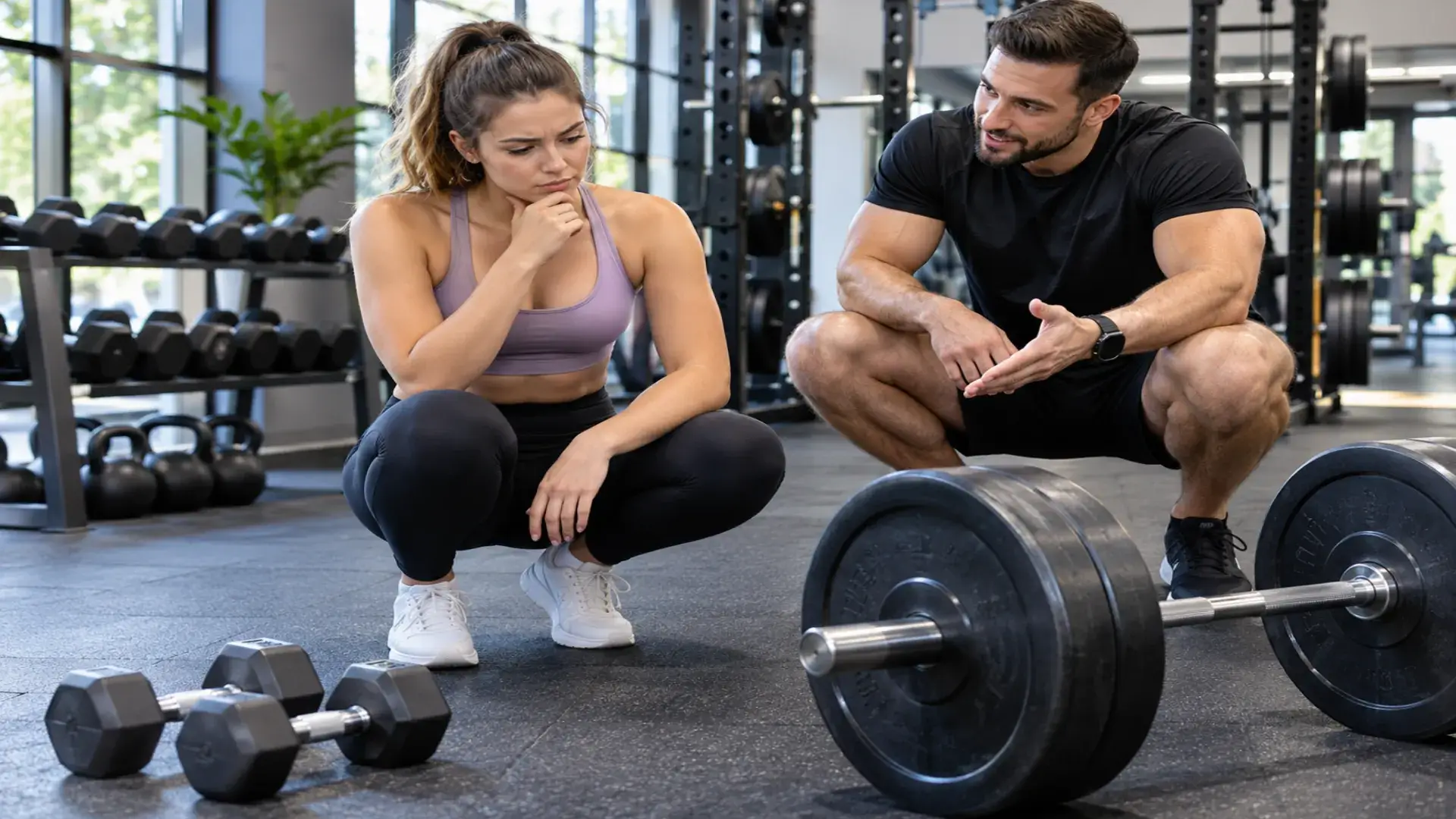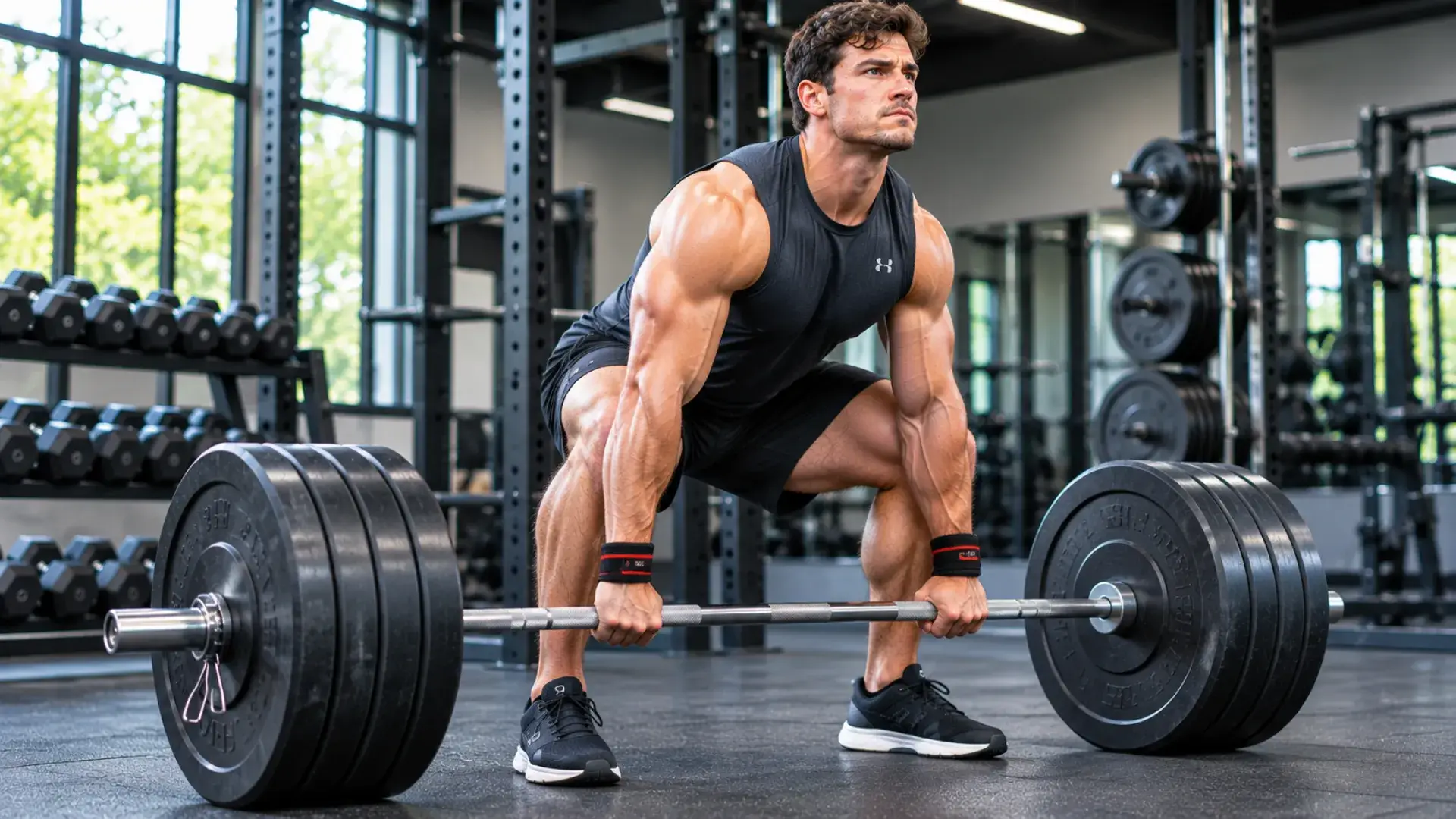
If your goal is to build bigger muscles and improve your physique, you may wonder whether lifting heavier weights will help you grow faster. It’s common to assume that the more weight you lift, the more muscle you’ll develop.
While lifting heavier weights can support muscle growth, it’s not the only way to stimulate your muscles. Training with lighter or moderate weights can also build muscle when you perform enough challenging repetitions and maintain proper technique.
The most effective approach is to gradually challenge your muscles without sacrificing form or recovery.
Let’s explore how lifting heavier weights affects muscle growth and how to choose the right resistance for your fitness goals.
Does Lifting Heavier Weights Build More Muscle?
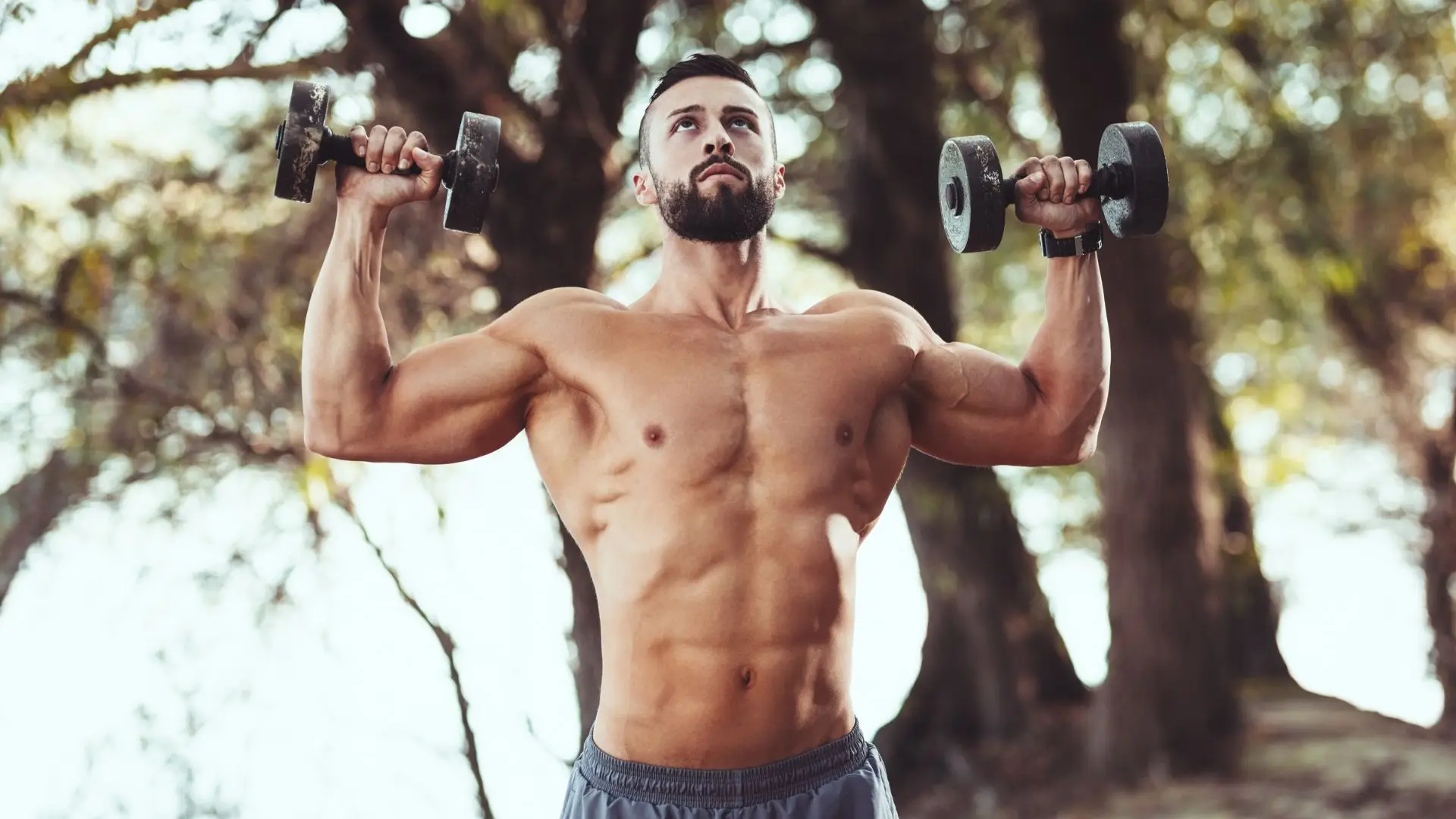
Lifting heavier weights can help develop muscle size and strength because it places a greater demand on your muscles. However, muscle growth doesn’t depend on weight alone.
Your muscles respond to challenging resistance, especially when your training sets bring you reasonably close to muscular fatigue.
For example, you might build muscle using:
Heavy weights for approximately 5–8 repetitions.
Moderate weights for approximately 8–12 repetitions.
Lighter weights for approximately 12–20 or more repetitions.
These are practical training ranges, not strict rules. Different repetition ranges can stimulate muscle growth when the effort and total training work are appropriate.
The important thing is to choose a weight that challenges you while allowing you to complete each repetition with good technique.
1. Understand the Difference Between Muscle Growth and Strength
Muscle growth and strength development are related, but they aren’t exactly the same.
Muscle growth (hypertrophy) refers to an increase in muscle size. It occurs when your training provides enough stimulus and your body has sufficient nutrition and recovery to adapt.
Strength development refers to improving your ability to produce force and lift heavier loads. This involves muscle development as well as improvements in coordination and nervous system adaptations.
If your main goal is to increase muscle size, you don’t need to focus exclusively on maximum-weight lifting.
However, if you want to improve your performance on exercises such as squats, deadlifts, and bench presses, practicing heavier lifts can be useful.
2. Use Progressive Overload to Build Muscle
One of the most important principles of muscle development is progressive overload.
This means gradually increasing the demands placed on your muscles as your body becomes stronger and adapts to your workouts.
You can achieve progressive overload by:
Increasing the amount of weight you lift.
Performing more repetitions with the same weight.
Adding an additional set to an exercise.
Improving your range of motion.
Using better control and technique.
Choosing a more challenging exercise variation.
For example, imagine you’re performing dumbbell chest presses with 20-pound weights for three sets of 10 repetitions.
Once you can complete all three sets comfortably with proper form, you might increase the weight slightly or perform additional repetitions before increasing resistance.
The goal is to make gradual improvements rather than forcing your body to lift significantly heavier weights before it’s ready.
For more guidance, check out our article on how to build muscle fast naturally.
3. Choose the Right Weight for Your Fitness Level
The best weight for muscle growth depends on your experience, strength, exercise selection, and training goals.
If you’re a beginner, starting with lighter resistance is often the better option. It gives you time to learn proper technique and develop the strength needed for more demanding exercises.
Here are some general guidelines:
Beginners: Start with manageable weights that allow you to perform each exercise with control. Focus on learning the movement before increasing resistance.
Intermediate lifters: Gradually increase weights, repetitions, or sets as your strength improves. Keep track of your performance to make sure your workouts continue to challenge you.
Advanced lifters: Use a combination of heavier and moderate loads, adjusting training volume and intensity to support your goals and recovery.
A good training weight should make the final few repetitions challenging without forcing you to compromise your technique.
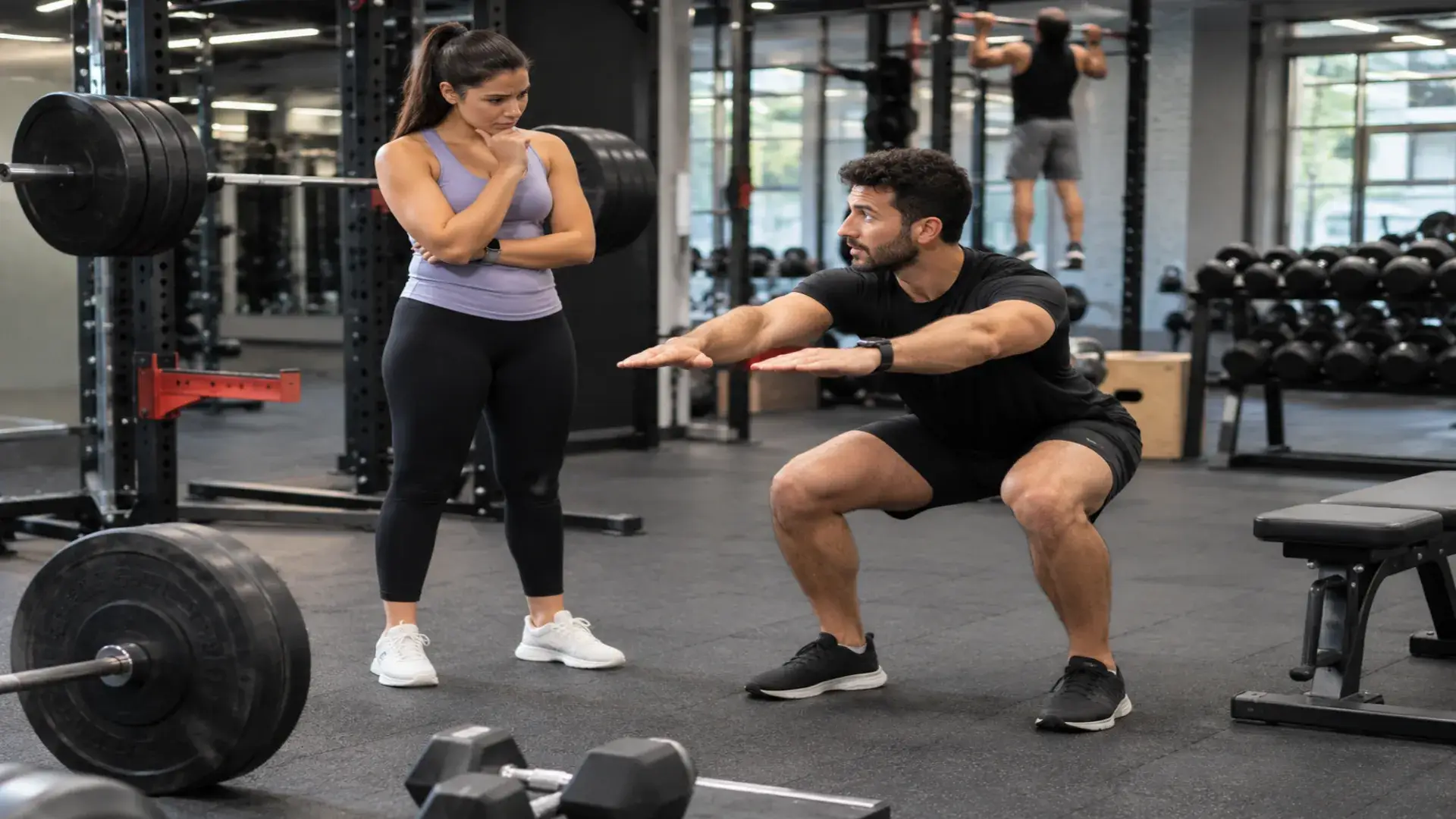
4. Don’t Sacrifice Proper Form to Lift Heavier
Lifting heavier weights isn’t useful if you can’t control the movement.
Using excessive resistance can lead to poor technique, shortened ranges of motion, and unnecessary stress on your joints and muscles.
For example, when performing a dumbbell bicep curl, swinging your upper body to lift a weight that is too heavy reduces your ability to control the exercise.
Instead, choose a weight that allows you to:
Maintain a stable body position.
Control the lifting and lowering phases.
Complete your intended range of motion.
Avoid using momentum to finish repetitions.
Keep the target muscles doing the work.
Proper technique helps you train more consistently and makes it easier to increase resistance over time.
If you’re new to strength training, our beginner strength training routine can help you learn the basics and build a foundation before progressing to heavier weights.
5. Train Close to Muscular Failure
Muscular failure occurs when you can no longer complete another repetition with proper technique.
You don’t need to reach complete failure during every set to build muscle. However, your sets should be challenging enough to stimulate the muscles you’re training.
For many exercises, finishing a set with approximately one to three good repetitions left in reserve can be an effective approach.
For example, if you could perform 12 repetitions before reaching technical failure, stopping at 9 or 10 controlled repetitions may still provide a useful training stimulus.
Avoid forcing extra repetitions when your technique starts breaking down, especially during heavy compound exercises.
6. Combine Heavy and Moderate Weights
You don’t have to choose between lifting heavy and using moderate weights. Combining different resistance levels can help you develop strength while providing enough training stimulus for muscle growth.
For example, a chest workout might look like this:
| Exercise | Sets | Repetitions |
|---|---|---|
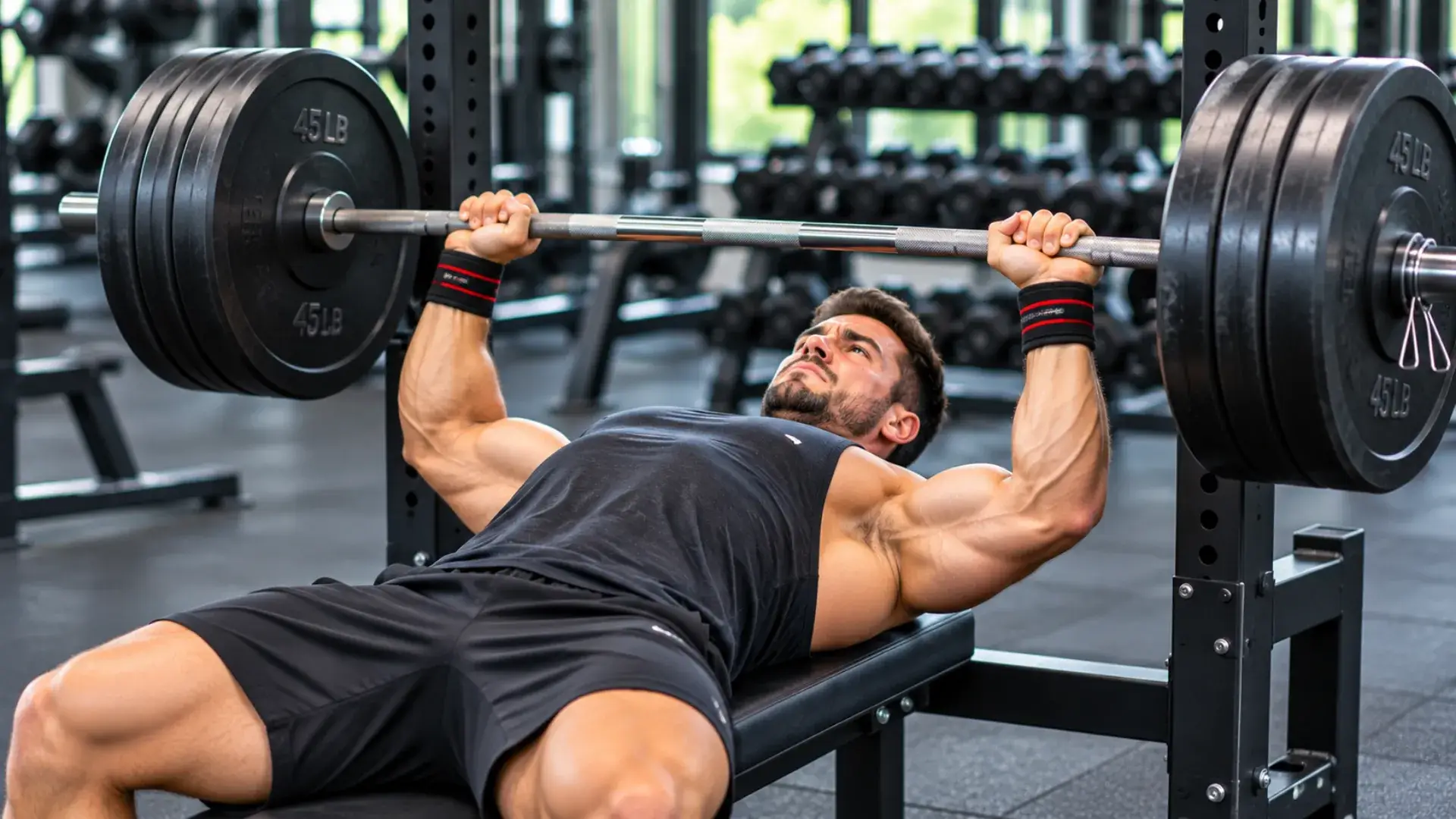
| Barbell Bench Press | 3 | 6–8 |
| Incline Dumbbell Press | 3 | 8–12 |
| Cable Chest Fly | 3 | 12–15 |
| Push-Ups | 2 | 10–15 |
This is only a sample workout. Your ideal training volume and resistance should depend on your experience and ability to recover.
Heavier compound exercises can help develop strength, while moderate and lighter exercises allow you to accumulate additional training volume.
7. Eat Enough Protein to Support Muscle Growth
Your workout provides the stimulus for muscle development, but your body also needs adequate nutrition to recover and build muscle tissue.
Protein is particularly important because it provides amino acids needed for muscle repair and growth.
Good protein sources include:
Chicken and turkey.
Fish and seafood.
Eggs.
Lean beef.
Greek yogurt.
Milk.
Beans and lentils.
Tofu.
For healthy adults who exercise regularly, approximately 1.4–2.0 grams of protein per kilogram of body weight per day is a commonly used range for supporting muscle development.
You should also consume enough carbohydrates to fuel your workouts and healthy fats to support overall health.
8. Give Your Muscles Enough Time to Recover
Lifting heavier weights places greater demands on your muscles and overall recovery. That’s why rest and proper sleep should be part of your training plan.
Your muscles need time to adapt between challenging workouts.
To support recovery:
Avoid training the same muscle groups intensely on consecutive days.
Get at least seven hours of sleep each night.
Eat balanced meals throughout the day.
Stay hydrated.
Adjust training intensity when you’re unusually fatigued.
Include rest days in your weekly schedule.
If you’re wondering whether you need to train every day, read our guide on whether strength training every day is beneficial.
More training isn’t automatically better. Your muscles need a balance of challenging workouts and recovery to keep progressing.
How Long Does It Take to Build Muscle by Lifting Weights?
Muscle growth takes time, and results vary depending on your age, genetics, training experience, nutrition, and consistency.
Beginners may notice improvements in strength relatively quickly as their bodies adapt to resistance training. Visible changes in muscle size generally take longer.
Rather than focusing only on how much weight you can lift, track other signs of progress, such as:
More repetitions with the same weight.
Better exercise technique.
Increased strength across different exercises.
Changes in muscle measurements.
Improvements in workout performance.
If you want a better understanding of realistic muscle-building timelines, read our article on how long it takes to build muscle.
Frequently Asked Questions
Should I lift heavy weights every time I work out?
No. You can build muscle using a combination of heavy, moderate, and lighter weights. The important factors are training effort, appropriate volume, good technique, and recovery.
Can lighter weights build as much muscle as heavier weights?
Yes. Lighter weights can stimulate muscle growth when you perform enough challenging repetitions and get reasonably close to muscular failure. However, heavier weights are generally more effective for improving maximum strength.
How many repetitions should I do to build muscle?
A range of approximately 6–20 repetitions works well for many muscle-building exercises, although muscle growth is possible outside this range. Choose resistance that allows you to perform challenging repetitions with proper form.
Will lifting heavier weights make me bulky?
Lifting weights doesn't automatically make you bulky. Significant muscle development requires consistent training, appropriate nutrition, and time. Your results will depend on your training goals and overall approach.
Should beginners lift heavy weights to build muscle?
Beginners should first focus on learning proper technique and developing basic strength. Once they can perform exercises safely and consistently, they can gradually increase resistance.
Build Muscle by Training Smarter, Not Just Heavier
Lifting heavier weights can help you build muscle and improve strength, but it’s not the only factor that determines your results. Proper technique, progressive overload, sufficient protein, and enough recovery all play important roles.
Instead of trying to lift the heaviest weight possible during every workout, focus on choosing resistance that challenges your muscles while allowing you to maintain control.
As your strength improves, gradually increase your training demands and track your progress.
Ready to build strength and muscle with a structured workout plan? Explore Personal Training St. George and find a training approach that supports your fitness goals.