
Strength training every day can be okay for some people, but it depends on how hard you train, which muscles you work, and how well you recover. Most adults do not need heavy lifting seven days a week to see results; a smart strength training schedule usually blends challenging sessions, lighter movement, and rest. If you are in St. George, Utah, or anywhere else, the best plan is the one you can repeat safely and consistently.
Should you do strength training every day?
You should not do intense, full-body strength training every day, especially if you are a beginner or returning after time off. The general physical activity guideline for adults is muscle-strengthening activity on at least two days per week, working major muscle groups, which means daily lifting is optional rather than required. More frequent training can work when volume and intensity are managed, but recovery is part of the program, not a sign that you are being lazy.
A better question is not simply, “Can you do strength training every day?” It is, “Can you recover from the strength training you are doing every day?” If every session is heavy squats, hard presses, and sets taken to failure, your joints, connective tissue, sleep, and motivation may push back. If some days are lighter, shorter, or focused on mobility and technique, daily movement can fit well.
Why recovery makes you stronger
Strength training challenges your muscles, nervous system, and connective tissues. The workout provides the stimulus, but adaptation happens between sessions when your body repairs, refuels, and prepares for the next demand. That is why strength training every other day often works so well for beginners: it gives you enough practice to improve while leaving space for soreness to fade.
Recovery does not always mean doing nothing. Walking, stretching, easy cycling, light core work, or a relaxed bodyweight circuit can all support a daily workout routine without turning every day into a max-effort session. For many people, the most sustainable pattern is to train hard on some days and move gently on others.
Watch for these signs that your plan may need more recovery:
Your performance drops for several workouts in a row.
Soreness lasts longer than normal or changes into sharp pain.
You feel unusually tired, irritable, or unmotivated.
Your sleep gets worse even though you are exercising more.
You keep needing extra caffeine just to get through workouts.
Small aches keep showing up in the same joints or tendons.
One rough workout is not a problem. A pattern of feeling worse while doing more is a signal to adjust.

The real strength training benefits come from consistency
The strength training benefits most people want—more muscle, better everyday function, stronger bones, improved confidence, and easier movement—come from repeated, progressive effort over time. Strength training can help increase lean muscle, support bone strength, and improve the way your body handles daily tasks like lifting groceries, climbing stairs, or carrying kids.
That does not mean more is always better. If daily workouts leave you exhausted, inconsistent, or injured, they are not superior to three focused sessions per week. A realistic plan you can follow for months will usually beat an aggressive plan you abandon after two weeks.
Consistency also gives you better information. When your schedule is stable, you can notice what is working: which exercises feel good, how much weight you can control, and whether you are recovering between sessions. Random daily intensity makes it harder to tell whether you are progressing or just accumulating fatigue.
A simple strength training schedule that works
For most beginners and busy adults, two to four strength sessions per week is a practical starting point. The CDC describes adult muscle-strengthening activity as training the major muscle groups—legs, hips, back, abdomen, chest, shoulders, and arms—on two or more days each week.
Here are three common options:
Option 1: Strength training every other day
This is a strong choice if you are new, sore easily, or want a balanced routine.
Monday: Full-body strength
Tuesday: Walk or mobility
Wednesday: Full-body strength
Thursday: Easy cardio or rest
Friday: Full-body strength
Saturday: Outdoor activity, stretching, or light core
Sunday: Rest
This rhythm gives each major muscle group time to recover while still building a dependable habit.
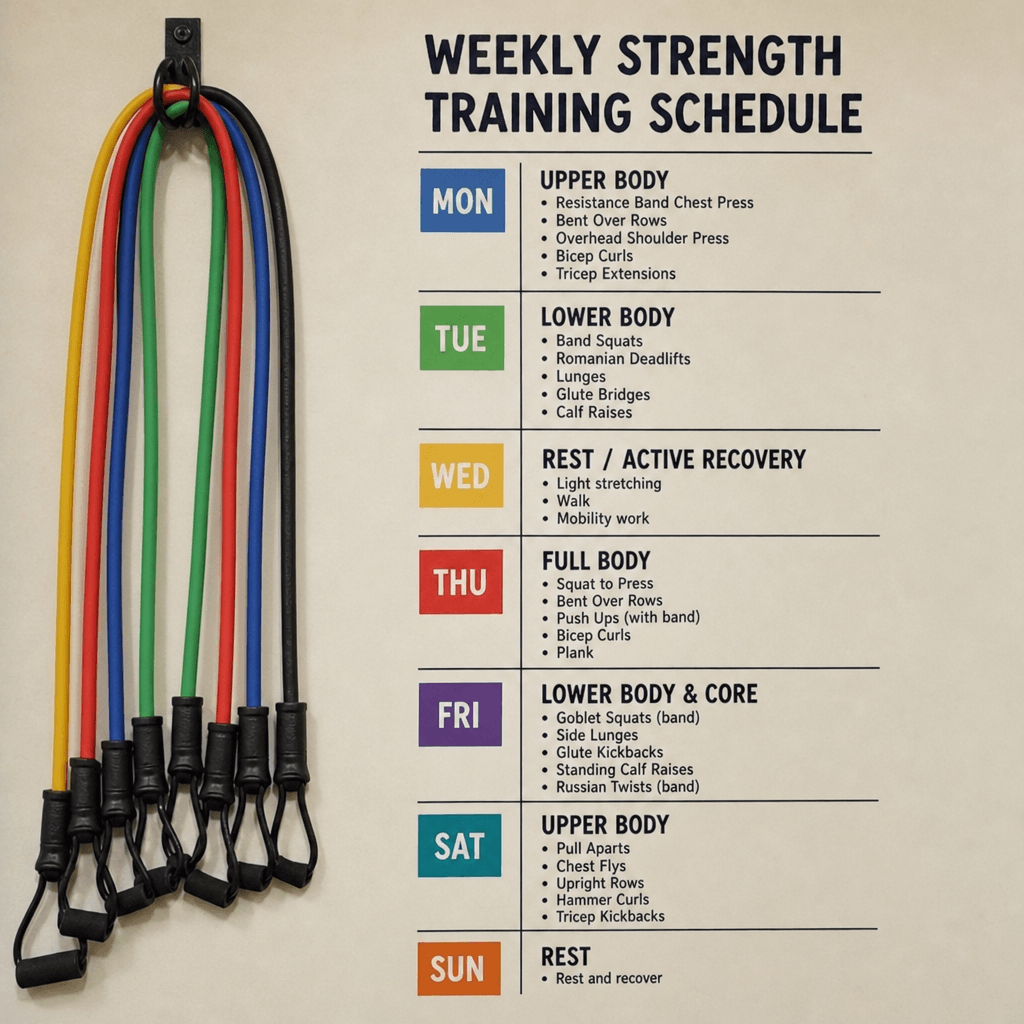
Option 2: Upper/lower split
This can work if you enjoy training four days per week.
Monday: Upper body
Tuesday: Lower body
Wednesday: Rest or easy movement
Thursday: Upper body
Friday: Lower body
Saturday: Light cardio, mobility, or recreation
Sunday: Rest
Because you alternate muscle groups, you can train more often without hammering the same areas every day.
Option 3: Daily movement with varied intensity
This is best for people who love routine and understand how to hold back when needed.
Day 1: Heavy lower body
Day 2: Moderate upper body
Day 3: Mobility and core
Day 4: Moderate lower body
Day 5: Heavy upper body
Day 6: Light full-body technique
Day 7: Walk, stretch, or rest
This answers “is it good to do strength training every day” with a practical middle ground: yes, if “strength training” includes lighter skill, stability, and recovery-focused sessions rather than seven hard lifting days.
How to know if daily strength training is right for you
Daily strength training may be appropriate if you already have a base of fitness, use good form, sleep well, eat enough, and rotate muscle groups or intensity. It may not be the right fit if you are dealing with pain, chronic fatigue, high stress, poor sleep, or a history of overuse injuries. If you have a medical condition, are pregnant, or are starting after a long break, it is smart to ask a qualified healthcare professional before making intense exercise a daily habit.
Use this quick checklist before adding more training days:
Experience: Have you trained consistently for at least several weeks?
Recovery: Do you feel ready for most workouts, not drained before they start?
Form: Can you complete reps with control instead of rushing or compensating?
Soreness: Are you mildly sore at most, rather than painfully stiff?
Schedule: Can you keep the plan without cutting sleep?
Purpose: Do extra sessions have a reason, or are they just added out of guilt?
If you cannot check most of those boxes, build from two or three weekly strength sessions first. You can always add more later.
Tips for building a daily workout routine safely
A daily workout routine should have contrast. Hard days need easier days around them, and large compound lifts need warm-ups, good technique, and enough recovery. Instead of asking your body for maximum output every day, give each session a clear job.
Start with these habits:
Rotate muscle groups. Avoid training the same muscles hard on back-to-back days.
Change intensity. Pair heavy days with lighter technique or mobility days.
Leave reps in reserve. Not every set needs to go to failure.
Warm up first. Use light movement and practice sets before heavier work.
Progress gradually. Add weight, reps, or sets slowly, not all at once.
Track how you feel. Energy, sleep, soreness, and mood all matter.
Protect rest days. If you feel worn down, make the next session easier.
This approach helps you stay active while reducing the risk that enthusiasm turns into burnout.
FAQ
Is it okay to do strength training every day?
Yes, it can be okay if your daily plan includes varied intensity, smart exercise selection, and enough recovery. However, most people in St. George, Utah, and elsewhere can make excellent progress with two to four well-designed strength sessions per week plus walking, mobility, or recreational activity on other days.
Can you do strength training every day as a beginner?
Beginners usually do better with strength training every other day or two to three days per week. This gives you time to learn proper form, manage soreness, and build confidence without overloading your body too soon.
Should you do strength training every day for weight loss?
You do not have to lift every day to support weight loss. Strength training helps build and maintain muscle, but nutrition, total movement, sleep, and consistency all matter. A balanced plan may include lifting, walking, cardio, and rest.
Is full-body strength training every day a good idea?
Hard full-body lifting every day is usually not the best approach. If you prefer full-body sessions, schedule them two to four times per week, or make some days very light and technique-focused.
What should I do on rest days?
Rest days can include easy walking, stretching, mobility work, or complete rest. Choose the option that helps you feel better for your next workout.
Optimize Your Recovery and Train Smarter Every Day
While daily strength training is possible, doing it safely requires precise balance—alternating muscle groups, managing intensity, and giving your body adequate time to repair. Lifting every day without a structured recovery plan is a fast track to burnout, plateaus, or overuse injuries. If you want to stay active daily while maximizing muscle growth and avoiding overtraining, expert programming is essential. Contact us today to connect with our certified strength coaches, and let’s design a customized training split that keeps you progressing safely every single day.