
If you’re new to lifting, you’ve probably asked yourself: how often should beginners strength train to see real results without burning out or getting hurt? It’s one of the most common questions we hear at Personal Training STG, and the answer matters more than most people realize — train too little and progress stalls, train too much and recovery suffers.
The good news is that beginners don’t need to live in the gym to build strength. In fact, less is often more when you’re just starting out. This guide breaks down exactly how often beginners should strength train, why that frequency works, and how to structure your first few months of training for steady, sustainable progress.
How Often Should Beginners Strength Train?
Most beginners should strength train 2 to 3 times per week, with at least one rest or active recovery day between sessions. This frequency gives your muscles, joints, and nervous system enough time to adapt and recover while still providing the consistent stimulus needed to build strength.
This isn’t just a rule of thumb — it’s backed by decades of exercise science. Beginners experience what’s called “newbie gains,” a period where the body responds quickly to almost any structured resistance training, as long as it’s applied consistently and with adequate recovery.
Why 2–3 Days a Week Works Best for Beginners
- Recovery drives adaptation. Muscles grow and strengthen during rest, not during the workout itself.
- Technique needs repetition, not volume. Beginners benefit more from practicing movement patterns consistently than from maximizing training days.
- It builds a sustainable habit. A realistic schedule keeps you consistent long enough to see visible results, which is often the biggest hurdle for new trainees.
What a Beginner Strength Training Schedule Looks Like
A well-structured beginner program focuses on full-body workouts rather than splitting muscle groups by day. This approach maximizes the benefit of each session while keeping the weekly commitment manageable.
Sample 3-Day Full-Body Schedule
- Monday – Full-body strength session (squat, push, pull, core)
- Tuesday – Rest or light activity (walking, stretching, mobility work)
- Wednesday – Full-body strength session
- Thursday – Rest or active recovery
- Friday – Full-body strength session
- Saturday/Sunday – Rest, light cardio, or recreational activity
Sample 2-Day Schedule for Busy Professionals
If your schedule only allows two days a week, that’s still enough to build strength as a beginner:
- Day 1 – Full-body strength session
- Day 2 – Rest
- Day 3 – Rest or light activity
- Day 4 – Full-body strength session
- Remaining days – Rest or low-intensity movement
Two focused, well-programmed sessions per week consistently outperform five inconsistent, unstructured ones.
Key Factors That Affect Training Frequency
While 2–3 sessions per week is the standard beginner recommendation, your ideal frequency can shift based on a few individual factors.
1. Recovery Ability
Sleep quality, nutrition, stress levels, and age all influence how quickly your body recovers between sessions. Someone sleeping seven to nine hours a night and eating enough protein will typically recover faster than someone under chronic stress or sleep-deprived.
2. Training Intensity
Beginners lifting close to their limit need more recovery than those using lighter, technique-focused loads. In the first several weeks, prioritizing form over heavy weight allows for slightly more frequent training without overtaxing the body.
3. Goals
- General strength and health: 2–3 sessions per week is ideal.
- Weight loss: 3 sessions of strength training plus additional cardio or activity on off days.
- Athletic performance: 3 sessions, gradually progressing toward 4 as work capacity improves.
Signs You're Training at the Right Frequency
It’s not always obvious whether your current schedule is working. Watch for these indicators.
- You feel recovered, not sore or fatigued, before your next session.
- Your strength is improving week to week, even in small increments.
- You’re sleeping well and your energy levels remain steady.
- You look forward to training rather than dreading it.
If you’re experiencing persistent fatigue, declining performance, or nagging joint pain, it may be a sign you’re training too frequently or with too much intensity too soon.
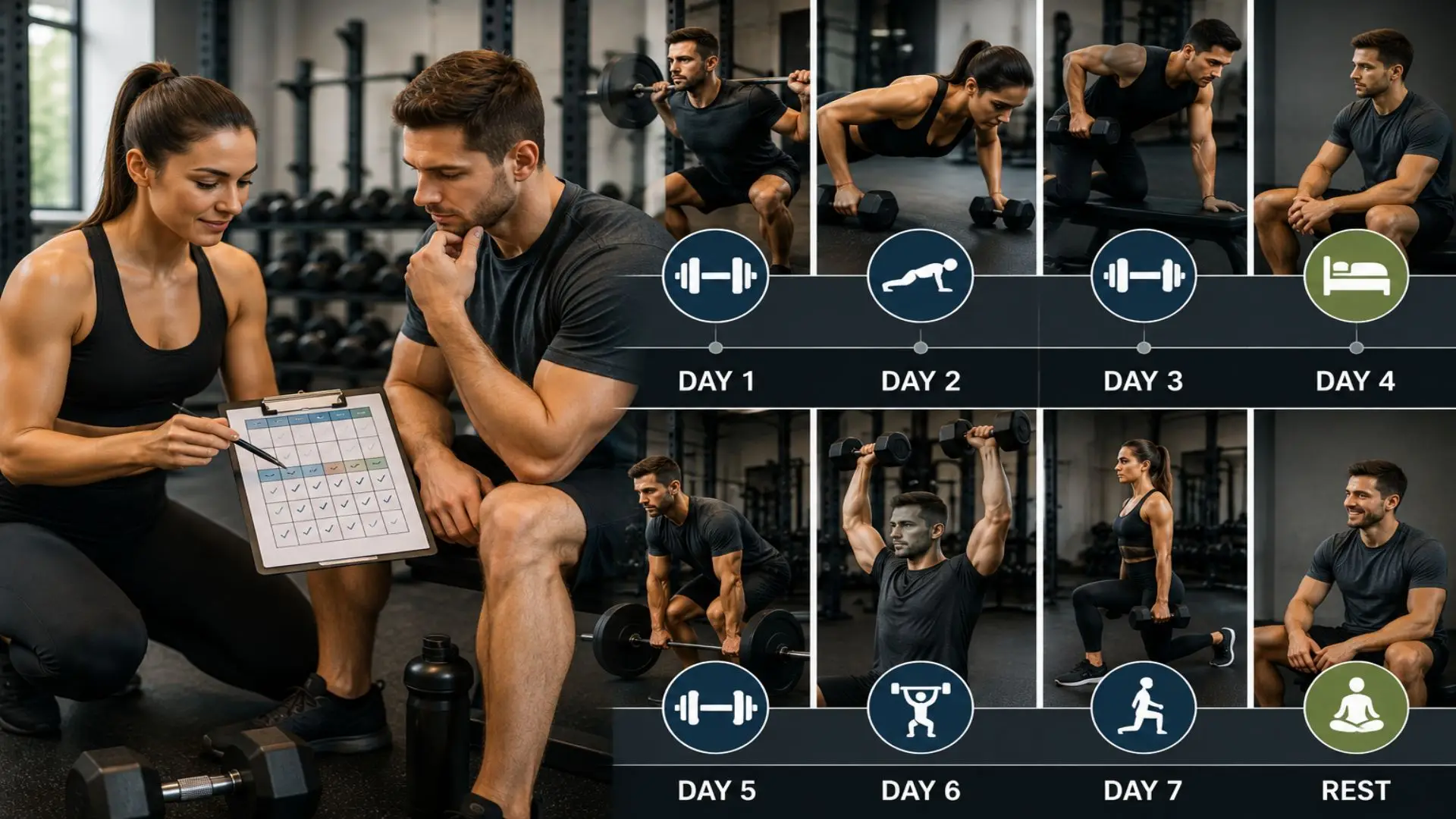
How to Progress Beyond the Beginner Stage
Once your body adapts — usually after 8 to 12 weeks of consistent training — you can gradually increase frequency, volume, or intensity. This is where working with a certified trainer becomes especially valuable, since progression that’s too aggressive is one of the most common causes of plateaus and injuries.
Actionable next steps:
- Track your workouts to monitor strength progress over time.
- Increase weight or reps gradually (aim for small, consistent jumps).
- Reassess your schedule every 6–8 weeks as your fitness improves.
- Prioritize sleep, hydration, and protein intake to support recovery.
Frequently Asked Questions
How often should beginners strength train per week?
Beginners should strength train 2 to 3 times per week, allowing at least one rest day between sessions to support recovery and long-term progress.
Can beginners strength train every day?
Training every day isn't recommended for beginners. The body needs recovery time to adapt to new stress, and daily training increases the risk of overtraining and injury.
Is 2 days a week enough for a beginner to build strength?
Yes. Two well-structured full-body sessions per week are enough to build noticeable strength for beginners, especially in the first few months of training.
How long should a beginner strength training session last?
Most beginner sessions last 45 to 60 minutes, including a warm-up, 4–6 main exercises, and a brief cool-down.
When should a beginner increase their training frequency?
Most beginners can consider increasing frequency after 8 to 12 weeks of consistent training, once recovery is quick and progress starts to plateau at the current schedule.
Final Thoughts on Beginner Strength Training Frequency
So, how often should beginners strength train? For most people, 2 to 3 sessions per week, focused on full-body movements with adequate recovery, is the sweet spot for building strength safely and sustainably. Consistency, proper technique, and smart progression matter far more than training every single day.
Starting a new strength training routine can feel overwhelming, but you don’t have to figure it out alone. A structured, personalized plan takes the guesswork out of training frequency, intensity, and progression — so you can focus on showing up and getting stronger.
Ready to Build Your Strength the Right Way?
Stop guessing how often you should train and start following a plan built specifically for your goals, schedule, and fitness level. At Personal Training STG, our certified trainers design personalized strength programs that help beginners build confidence, avoid injury, and see real results faster.
Contact us today to schedule your consultation and take the first step toward a stronger, healthier you.